

Senior Mobility Training Results That Matter

A favorite chair, a flight of stairs, the grocery cart, a grandchild reaching up for a hug - everyday moments can show us more about movement than any fitness test. Senior mobility training results are not just about touching your toes or completing a certain number of exercises. They are about feeling more capable, more confident, and more comfortable doing the things that make life full.
For many adults, the goal is not to train like a competitive athlete. It is to keep moving with confidence, maintain independence, and enjoy time with family without worrying that a simple task will feel overwhelming. The right routine can help support those goals in a welcoming setting, at a pace that respects where each person is starting.
What Senior Mobility Training Results Really Look Like
Mobility is the ability to move with control through the range of motion your body needs for daily life. It involves more than flexibility. Strength, balance, coordination, posture, and joint comfort all play a part.
That means progress can look different from person to person. One member may notice it is easier to turn and look over a shoulder while driving. Another may feel more stable stepping off a curb or getting up from the floor after playing with the kids. Someone else may be able to walk farther around the neighborhood before needing a break.
These wins matter because they add up. Better movement can make routines feel less demanding and encourage people to stay active, social, and engaged. The most meaningful results are often practical ones: carrying laundry with more control, moving through the kitchen more comfortably, or joining a family outing with more confidence.
Progress is personal, not a race
Mobility changes rarely happen all at once. Some people feel a difference in body awareness within a few sessions, while improvements in strength, balance, and confidence may take several weeks of consistent practice. Age, previous injuries, medications, sleep, stress, and activity history can all affect the timeline.
A good program does not compare one member's progress to someone else's. It measures improvement against that person's own starting point. If standing up from a chair feels smoother than it did last month, that is progress worth celebrating.
The Building Blocks That Support Better Movement
Mobility training works best when it includes movements that are useful outside the gym. A thoughtful approach usually blends controlled strength work, balance practice, gentle range-of-motion exercises, and regular walking or other low-impact activity.
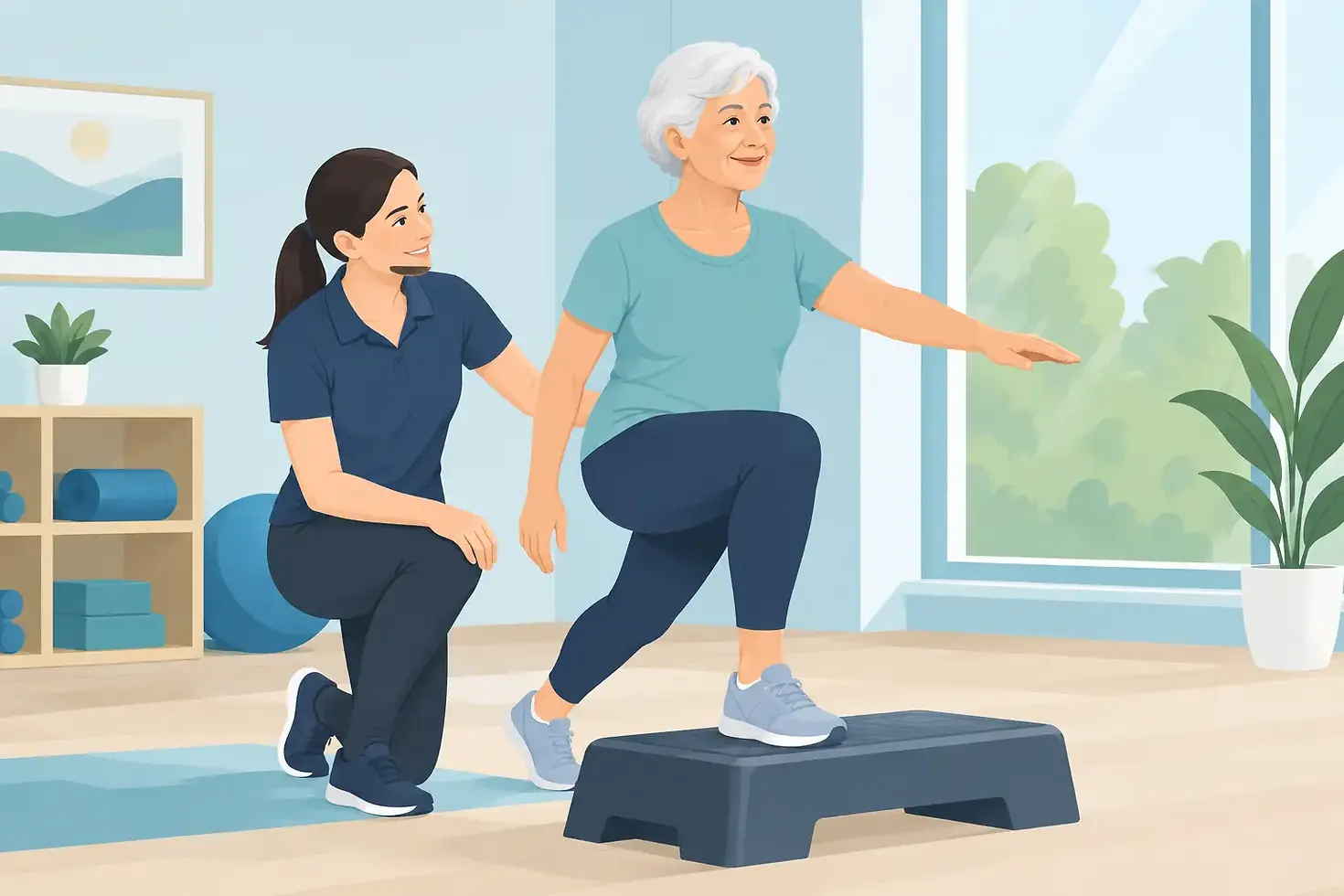
Strength is especially valuable. Stronger legs and hips can support everyday tasks like rising from a chair, climbing stairs, and staying steady while carrying a bag. Exercises may include sit-to-stands, supported squats, step-ups, light resistance work, or carefully chosen machine exercises. The right choice depends on the individual, not on what happens to be popular online.
Balance work should also be practical and appropriately challenging. That might mean standing near a stable support while shifting weight from side to side, practicing heel-to-toe walking, or working on controlled single-leg support with guidance. Balance is not about taking unnecessary risks. It is about gradually teaching the body to respond with more control.
Gentle mobility drills can help people move their shoulders, hips, ankles, and upper back through comfortable ranges. A trainer may use chair-supported movements, light stretching, or warm-up patterns that prepare the body for exercise. Pushing hard into pain is not the goal. Consistent, comfortable practice is usually more helpful than forcing a stretch.
How to Measure Senior Mobility Training Results
The scale does not tell the full story, and neither does a mirror. Tracking functional changes gives a clearer picture of whether a routine is helping day-to-day movement.
Before starting, choose a few simple markers that matter to the individual. For example, a person might pay attention to how easily they can stand from a chair, how long they can walk comfortably, whether stairs feel more manageable, or how steady they feel while getting dressed. Write down the starting point, then revisit it every few weeks.
It is also helpful to notice the quality of movement. Is there less hesitation before standing? Does posture feel taller? Is it easier to turn, reach, or step sideways? These details may seem small, but they often reveal meaningful changes before big performance milestones appear.
For safety, use the same setup each time you check progress. If you are tracking chair stands, use the same chair. If you are tracking a walk, use a similar route and pace. Consistency makes the comparison more useful.
Why Consistency Beats the Perfect Workout
A long workout that leaves someone sore, discouraged, or worried about coming back is not always a winning plan. For most older adults, regular movement that feels manageable is far more valuable than an occasional all-out effort.
Two or three structured sessions per week, paired with gentle movement on other days, can be a strong place to begin. That may include a group fitness class designed for different ability levels, a personal training session, pool-based movement, or a simple gym routine built around comfortable equipment and clear instruction.
Recovery belongs in the plan, too. Muscles and joints need time to adjust, especially for someone returning to exercise after a long break. Adequate sleep, hydration, nourishing meals, and rest days can all support a positive experience. Some days will feel stronger than others. That is normal, and it does not erase progress.
A Supportive Setting Makes a Difference
Walking into a gym should not feel like walking into a test. Older adults deserve a place where questions are welcome, modifications are normal, and staff members are ready to help them feel at ease.
At Total Fitness Center, that community-minded approach matters. A familiar face, a trainer who remembers your goals, or a class where people encourage each other can make it easier to keep showing up. For many members, the social side of fitness becomes part of the motivation.
The best environment also offers options. Some people enjoy exercising independently after learning a routine. Others prefer the structure and accountability of personal training or group classes. Pool access may be appealing for those who want lower-impact movement, while recovery amenities can offer a relaxing way to wind down after activity. There is no single right path, only the path that feels safe, enjoyable, and realistic enough to continue.
When to Slow Down and Ask for Guidance
Exercise should create a sense of productive effort, not sharp pain, dizziness, chest discomfort, or unusual shortness of breath. If those symptoms occur, stop and seek appropriate medical guidance. Anyone with a new medical diagnosis, recent surgery, frequent falls, significant joint pain, or concerns about starting exercise should talk with a healthcare professional before beginning a new program.
Guidance is also helpful when a movement feels awkward or intimidating. A qualified fitness professional can suggest a different exercise, reduce the range of motion, add support, or adjust resistance. Modifying a workout is not settling for less. It is a smart way to keep moving safely and build trust in your body.
Start With the Next Comfortable Step
There is no age limit on feeling stronger in your daily routine. Start with one comfortable action: take a short walk, practice standing from a chair with control, attend a beginner-friendly class, or ask for help building a simple plan. The goal is not to prove anything. It is to create more good days filled with the movement and people you enjoy.


Comments