

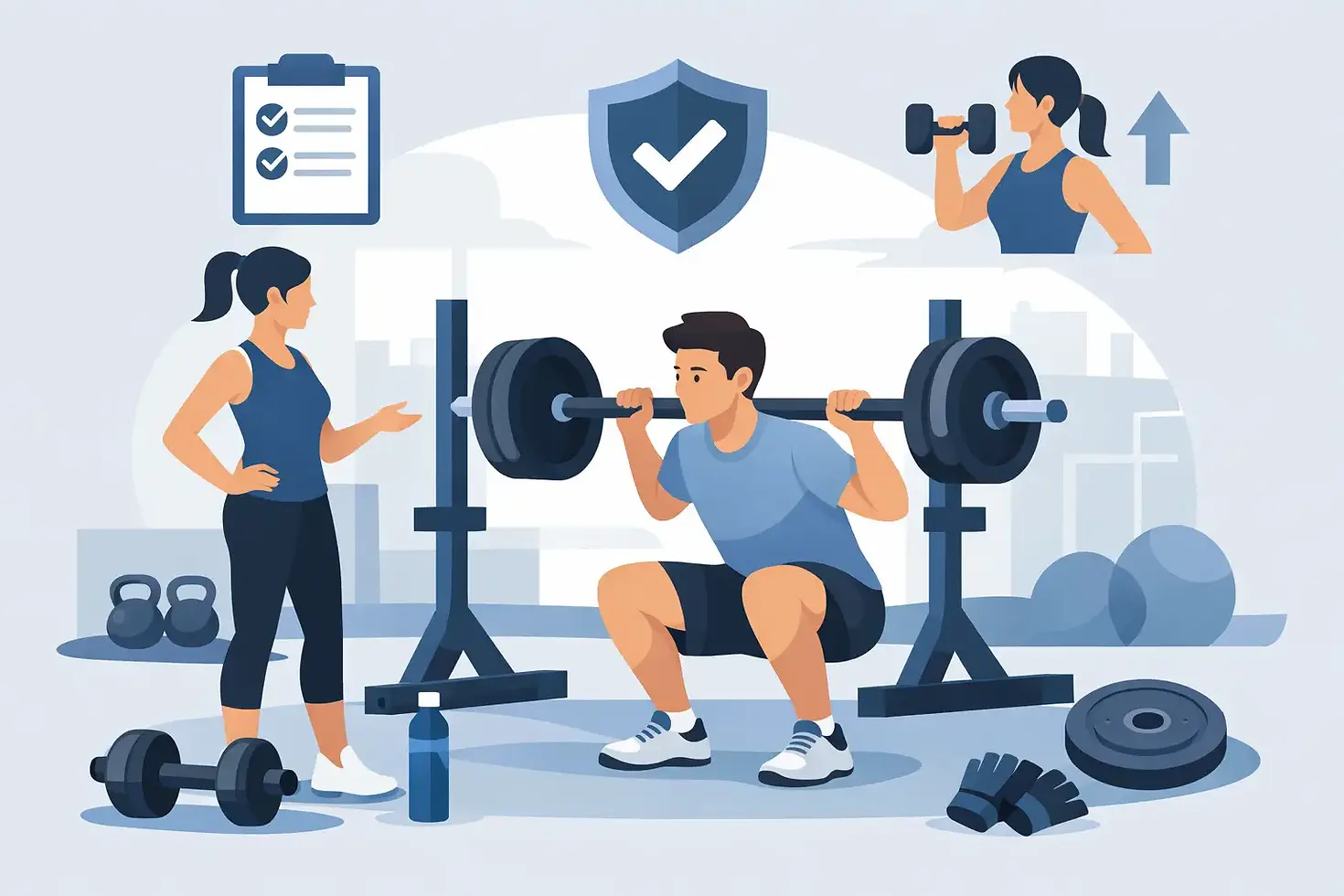
A Guide to Starting Strength Training Safely

Walking into the weight room for the first time can feel like the hardest rep of all. If you have been curious about lifting but do not want to get hurt, this guide to starting strength training safely is for you. The good news is that you do not need to be an athlete, know every machine, or lift heavy weights to begin. You just need a smart plan, a little patience, and a place where you feel comfortable asking questions.
Strength training is one of the best ways to support everyday life. It can help you carry groceries more easily, keep up with your kids, improve balance, protect your joints, and build confidence that shows up far beyond the gym. But safe progress matters more than fast progress, especially in the beginning.
Why starting slow is actually the smart move
A lot of beginners worry they are not doing enough unless they leave a workout exhausted. In reality, the safest way to begin is to do less than you think you can. Your muscles may be ready for a challenge before your joints, tendons, and coordination are. That is why easing in helps your body adapt without unnecessary strain.
Starting light also gives you room to learn. Strength training is not just about effort. It is about movement quality, control, and consistency. When you begin with manageable weight, you can focus on how an exercise feels instead of simply trying to survive it.
There is also a confidence factor. Small wins matter. Finishing a workout feeling capable instead of overwhelmed makes it much easier to come back for the next one.
A guide to starting strength training safely begins with the basics
Before you think about sets, reps, or advanced routines, start with a few practical basics. If you have a current injury, chronic pain, balance concerns, or a medical condition that affects exercise, it is wise to talk with your doctor before starting. That is not about discouragement. It is about giving yourself the clearest and safest path forward.
Once you are ready to train, keep your first goal simple. Learn the main movement patterns that show up in everyday life and in most strength programs: squatting, hinging, pushing, pulling, carrying, and bracing your core. You do not need dozens of exercises. A few well-chosen movements performed with good form will take you much further than an overly complicated plan.
For many beginners, machines can be a great starting point because they offer support and help guide the movement path. Dumbbells are also beginner-friendly because they teach control and balance. Barbells can be excellent too, but they usually make more sense after you have some practice with basic movement mechanics.
What a safe beginner workout can look like
Your first few weeks should feel approachable. Two or three full-body sessions per week is enough for most beginners. That schedule gives your body time to recover and helps you build a routine that fits real life.
A balanced beginner workout might include a lower-body exercise such as a leg press or bodyweight squat, a hip hinge like a glute bridge or light Romanian deadlift, an upper-body push such as a chest press, an upper-body pull like a seated row, and a core exercise such as a dead bug or plank variation. Walking between sets or finishing with light cardio is fine, but it does not need to be long or intense.
Aim for a weight you can move with control for about 8 to 12 reps while still feeling like you could do a couple more at the end. That usually means you are working hard enough to improve without pushing into sloppy form. One or two sets per exercise can be plenty when you are just starting out.
Form matters, but perfection is not the goal
Good form helps reduce injury risk and makes each exercise more effective. But many people get so worried about doing everything perfectly that they freeze up or avoid strength training altogether. Safe training is not about looking flawless. It is about staying controlled, pain-free, and aware of what your body is doing.
A few cues go a long way. Move at a steady pace. Keep your breathing natural instead of holding your breath the entire set. Use a range of motion you can control. Stop if you feel sharp pain, pinching, or anything that seems wrong.
It also helps to remember that discomfort and pain are not the same thing. Working muscles can burn. New exercises can feel unfamiliar. Mild soreness the next day is common. Sharp pain, joint pain, numbness, or pain that changes your movement is a signal to stop and reassess.
Common mistakes that can make beginners feel discouraged
One of the biggest mistakes is trying to do too much too soon. That might mean lifting too heavy, training too often, or copying workouts designed for experienced lifters. Progress is not measured by how hard you can push on day one. It is measured by what you can repeat week after week.
Another common issue is skipping the warm-up. You do not need an elaborate routine, but five to ten minutes of light cardio and a few simple mobility movements can help you feel more prepared. Think of it as giving your body time to wake up and your mind time to focus.
Many beginners also overlook rest. Muscles do not get stronger during the workout. They get stronger as they recover from it. Sleep, hydration, and regular meals all support that process. If you are constantly sore, exhausted, or dreading workouts, that is a sign to scale back.
How to know when to increase the weight
Progress should be gradual. If your current weight feels smooth, controlled, and a little too easy for all your planned reps, you can increase slightly next time. That increase does not need to be dramatic. Even a small jump is enough to create progress.
If adding weight makes your form break down, that is your answer. Stay where you are a little longer. There is no prize for rushing. In fact, some of the best long-term results come from people who are patient enough to build a strong foundation.
This is where guidance can make a real difference. A supportive coach or trainer can help you choose the right exercises, adjust your form, and progress at the right pace. For many people, that extra reassurance turns uncertainty into momentum.
The mental side of starting strength training safely
The physical side gets most of the attention, but the mental side matters just as much. Beginners often assume everyone else in the gym knows exactly what they are doing. That is rarely true. Most people are focused on their own workout, and many have felt the same nerves you may be feeling now.
Choose an environment that feels welcoming, not intimidating. That can make a huge difference in whether strength training becomes something you stick with. If you are more comfortable in a quieter space, prefer women-focused areas, want access to childcare while you work out, or appreciate having staff who know your name, those details matter. They remove barriers and make consistency more realistic.
At a community-focused fitness center like Total Fitness Center, that sense of support can be especially helpful for beginners. When the atmosphere is friendly and approachable, asking for help feels easier, and that often leads to safer, more confident training.
Guide to starting strength training safely for real life
The best strength plan is the one that works with your life, not against it. If you are a busy parent, two solid workouts a week may be more sustainable than aiming for five and quitting after two weeks. If you are returning to exercise after years away, your starting point may look different from someone who has been active recently. That is normal.
Try to think in months, not days. One workout will not change your body. One missed workout will not ruin your progress. Safe, steady training builds strength in a way that lasts.
Keep your routine simple enough that you can repeat it. Track a few basics like the exercises you did, the weight you used, and how the workout felt. That gives you a clear picture of progress without making fitness feel complicated.
Most of all, give yourself permission to be a beginner. Everyone starts somewhere. Strength training does not have to be extreme to be effective, and it does not have to be intimidating to change your life. Start light, learn the basics, ask for help when you need it, and trust that confidence grows with practice. A safe start is not a slow start. It is the kind that gives you the best chance to keep going.


Comments