

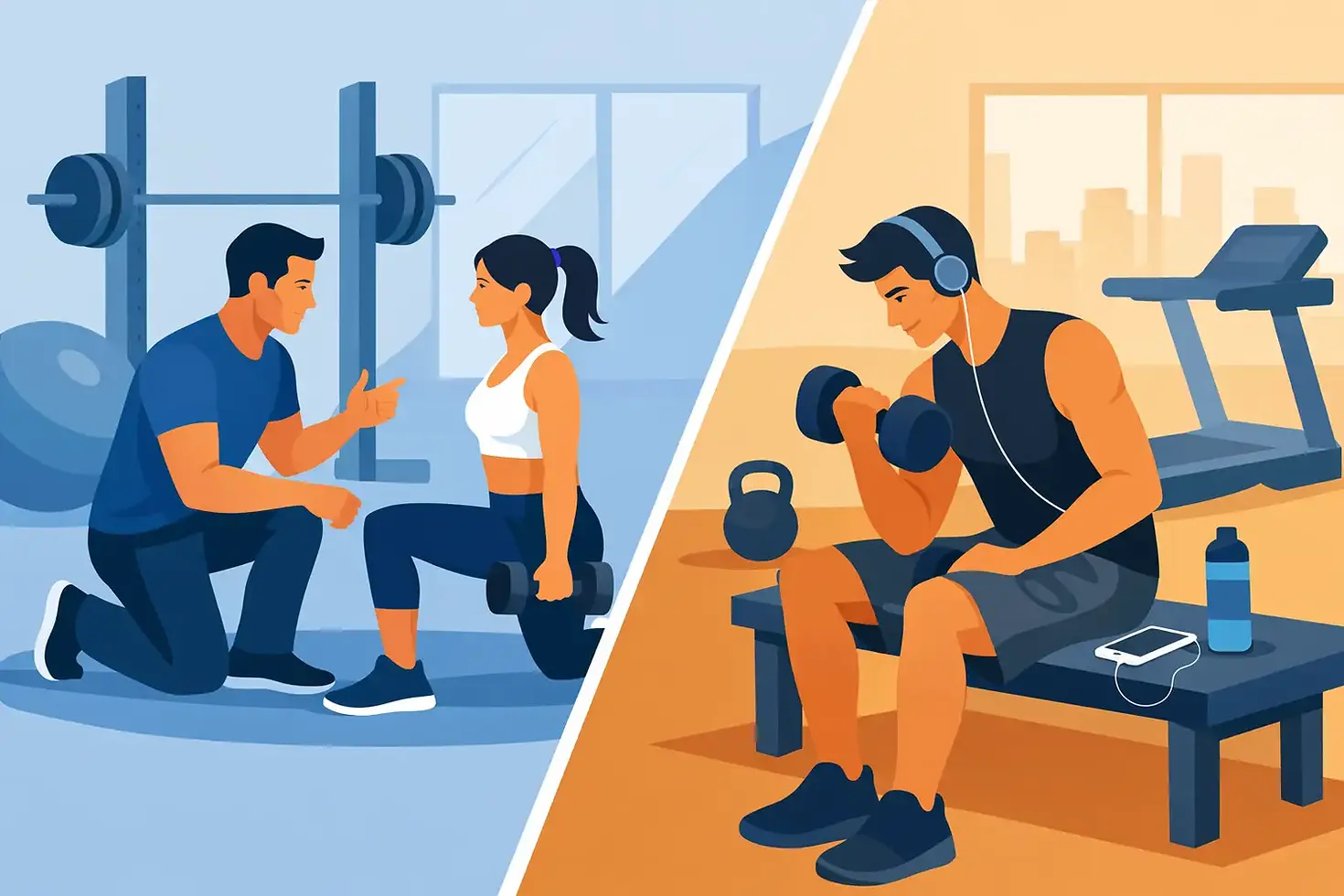
Personal Training vs Working Out Alone
- Susan

- Jun 18
- 6 min read
Some people join a gym ready to go all in on their own. Others know they want guidance from day one. When it comes to personal training vs working out alone, the right choice usually has less to do with willpower and more to do with your goals, comfort level, schedule, and the kind of support that helps you stay consistent.
That matters because consistency is what changes your health over time. Not the perfect workout. Not the most expensive plan. Not one strong week followed by two missed ones. The best fitness approach is the one you can actually keep showing up for.
Personal training vs working out alone: what is the real difference?
At a glance, the difference seems simple. Personal training gives you expert guidance, structure, and accountability. Working out alone gives you flexibility, independence, and often a lower cost.
But for most people, the real difference shows up in everyday life. It is the difference between walking into the gym with a plan or wandering from machine to machine. It is the difference between pushing through a tough week because someone is expecting you, or skipping a few workouts and slowly losing momentum.
Neither option is automatically better. Both can work well. Both can also fall short if they do not match your needs.
When personal training makes the biggest difference
Personal training can be a great fit if you want more than access to equipment. It helps when you need a clear path and someone to help you stay on it.
If you are new to exercise, a trainer can remove a lot of the guesswork. Many beginners are not just unsure what to do. They are also unsure what is safe, what is effective, and how hard they should really be working. A trainer can teach proper form, build a plan around your current fitness level, and help you avoid the common cycle of starting too hard, getting sore or discouraged, and stopping.
Training also makes sense when you have a specific goal. Maybe you want to lose weight, build strength, improve your energy, move better after time away from exercise, or prepare for an event. A personalized plan can help you get there faster because your workouts are built for you instead of pulled from a generic online routine.
There is also the accountability factor. For many busy adults, that is the deciding point. Life fills up quickly with work, family schedules, errands, and everything else that competes for your attention. When you have a scheduled session, it becomes easier to protect that time. You are not just promising yourself you will work out sometime today. You have a real appointment.
This can be especially helpful for parents and caregivers who are used to putting everyone else first. A trainer adds structure, but often just as importantly, they add encouragement. That support can make fitness feel less like one more responsibility and more like something you are doing for your own well-being.
Where working out alone has an advantage
Working out alone gives you freedom, and that freedom can be powerful.
If you already know how to exercise safely and you enjoy creating your own routine, solo workouts may be exactly what you need. You can come in when your schedule allows, spend more time on the machines or movements you like, and adjust your pace based on how you feel that day.
For some people, that independence is motivating. They like choosing their own music, moving through the gym without conversation, and building fitness in a way that feels personal and low pressure. If you have enough experience to plan balanced workouts and keep progressing over time, working out alone can be both effective and satisfying.
It can also be a better starting point if budget is your main concern. A gym membership gives you access to equipment, space, and often a range of amenities that support your routine. If cost has kept you from getting started, solo workouts can be a practical way to begin building consistency now.
That said, independence works best when it comes with self-awareness. If you tend to skip workouts, repeat the same exercises without progress, or feel unsure once you walk through the door, working out alone may save money up front but cost you momentum later.
The trade-offs most people do not think about
The biggest trade-off is not just money. It is clarity.
With personal training, you are paying for expertise, efficiency, and accountability. That can help you avoid wasted time and reduce the frustration of not knowing whether your effort is actually moving you forward. If you only have a few hours each week to focus on fitness, a structured plan can be worth a lot.
With solo workouts, you keep more flexibility and control. But that freedom asks more from you. You have to decide what to do, how often to change your routine, how to progress, and how to stay motivated when life gets busy.
There is also an emotional side to this choice. Some people feel more confident with a trainer because they do not want to second-guess themselves. Others feel more comfortable easing in quietly on their own before asking for help. Both responses are normal.
Fitness is personal. The approach that helps one person feel supported might make another feel pressured. The key is choosing the kind of environment that helps you come back tomorrow, next week, and next month.
How to know which option fits you right now
A simple way to think about personal training vs working out alone is to ask yourself where you need the most help.
If your biggest challenge is knowledge, personal training is often the better choice. If you are unsure how to use equipment, how to combine cardio and strength training, or how to work around an injury or limitation, guidance matters.
If your biggest challenge is motivation, personal training may also help because it adds accountability and a relationship. A friendly face who knows your goals can make a huge difference on the days when motivation is low.
If your biggest challenge is scheduling or cost, working out alone may be the more realistic fit, at least for now. That does not mean you are settling. It means you are choosing the option that makes it easier to build a routine within real life.
And if your biggest challenge is confidence, the answer depends on your personality. Some people gain confidence from one-on-one support. Others gain it by exploring the gym at their own pace. Think about what will make you feel more comfortable, not what sounds best on paper.
You do not always have to choose just one
This is where many people get stuck. They treat it like a permanent decision when it can be a flexible one.
You might start with personal training to learn form, understand equipment, and build a plan. Then you can continue working out on your own with more confidence. Or you might begin solo, realize you have hit a plateau, and add a few training sessions to get back on track.
A blended approach works well for many adults because needs change. The support you need in your first month may not be the same support you need six months from now. What matters is staying open to what will help you keep moving forward.
At a welcoming gym, that flexibility can make fitness feel far more approachable. At Total Fitness Center, for example, members can find room for both independence and support, whether they want to follow their own routine or get personalized guidance in a friendly, community-centered setting.
What leads to better long-term results?
Long-term results usually come from the option that helps you stay consistent, feel capable, and recover well enough to keep going.
For one person, that may be a trainer who builds a realistic plan and keeps them accountable. For another, it may be the freedom to come in on their own schedule, take a class occasionally, use recovery amenities, and create a routine that fits family life.
The important thing is to be honest about what you need right now, not what you think you should need. There is no prize for figuring it all out alone if support would help. There is also no rule that says you need a trainer if you are already doing well on your own.
A good fitness routine should challenge you, but it should also fit your life. It should help you feel stronger, more energized, and more confident walking into the gym, not more overwhelmed.
If you are weighing personal training vs working out alone, start with the option that makes it easiest to keep your promise to yourself. The best routine is the one that meets you where you are and gives you a reason to come back.


Comments